See lane risk before it hits the route.
LaneGuard connects suppliers, routes, shipment movement, inventory pressure, and disruption notes into one source-linked view so operations teams can act before delays spread.
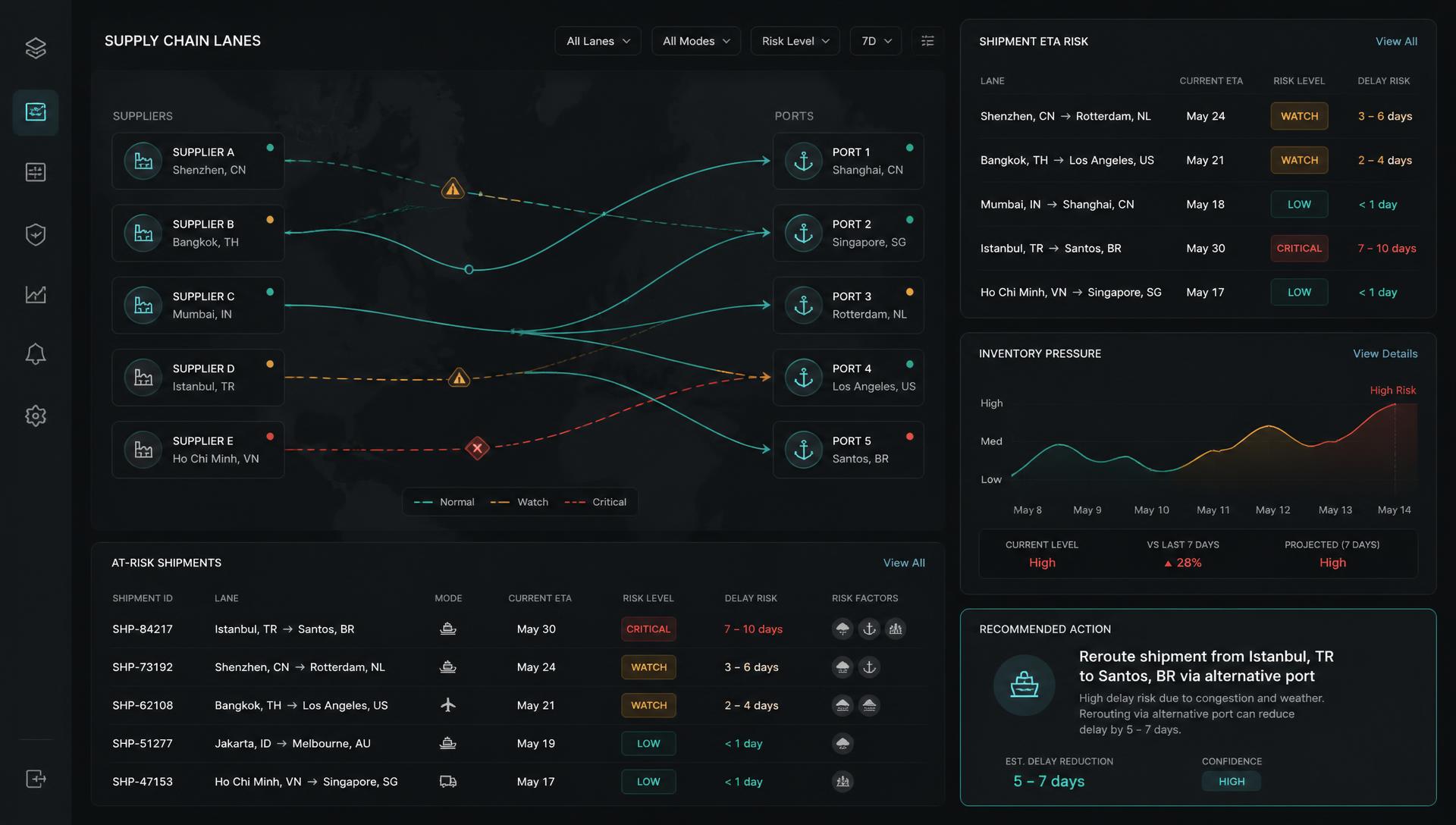
Measured from system telemetry and time-stamped client ERP action logs. Customer reported under NDA and shown anonymized.
Supply disruption travels through lanes before it hits production.
Each lane carries its own early signals. LaneGuard reads them together instead of one spreadsheet at a time.
One tier-2 plant sits behind six critical parts.
Concentration stays invisible until a single site stops shipping.
Delays surface after the ETA is already gone.
Port congestion and carrier rerouting show up late in the plan.
Coverage erodes weeks before a stockout.
Buffer stock absorbs the first shock, then runs out quietly.
Certificates lapse while the lane keeps running.
Expiring documents block shipments at the least convenient moment.
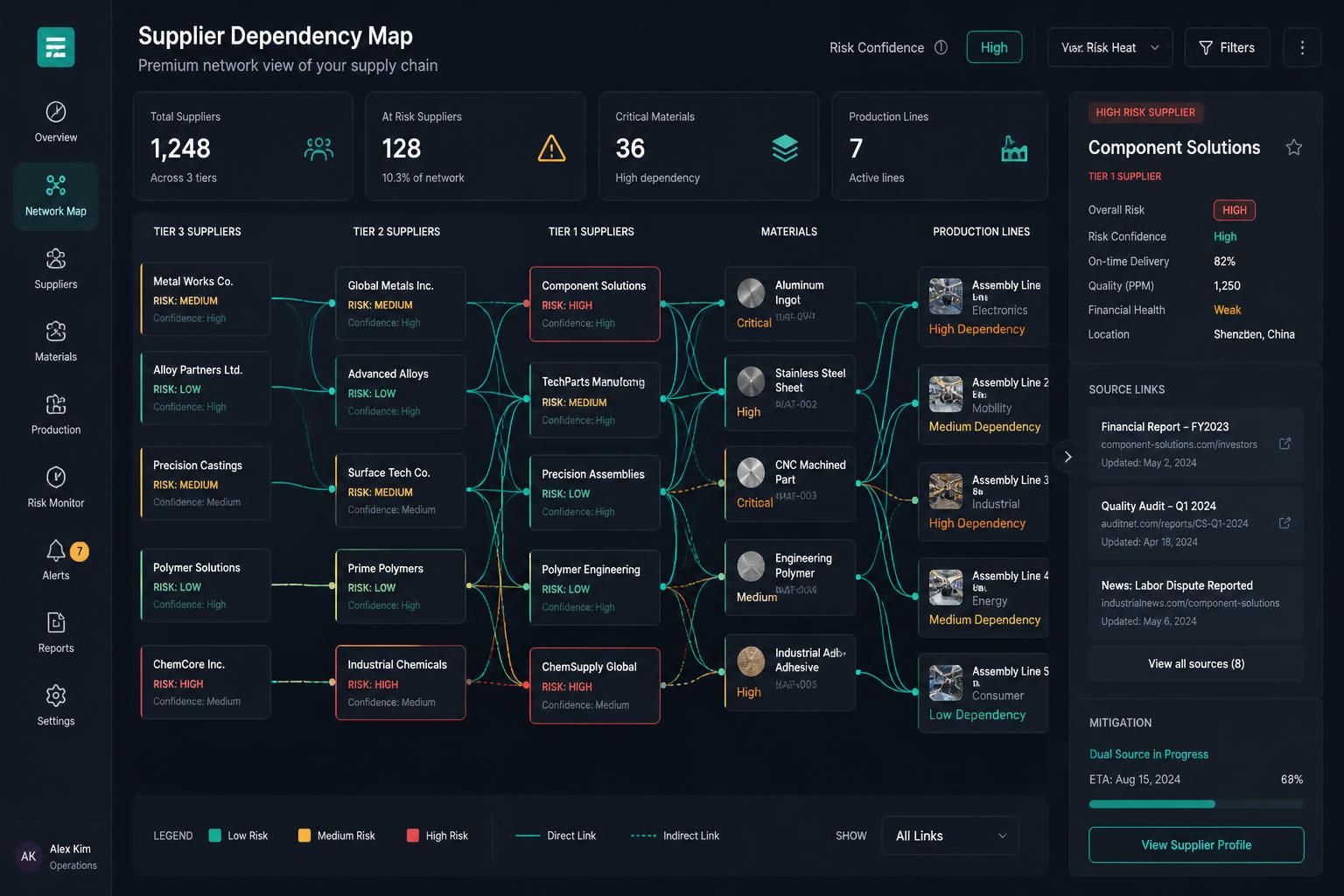
Trace every supplier and shipment to the production outcome it touches.
Suppliers, materials, and shipments connect into lanes, and each lane connects to the lines, programs, and orders it feeds. When a signal lands, the affected outcome is already mapped.
- Supplier → material → shipment → production line dependency paths
- Severity shading from teal to amber as lane risk rises
- One-click depth into tier-2 and tier-3 exposure
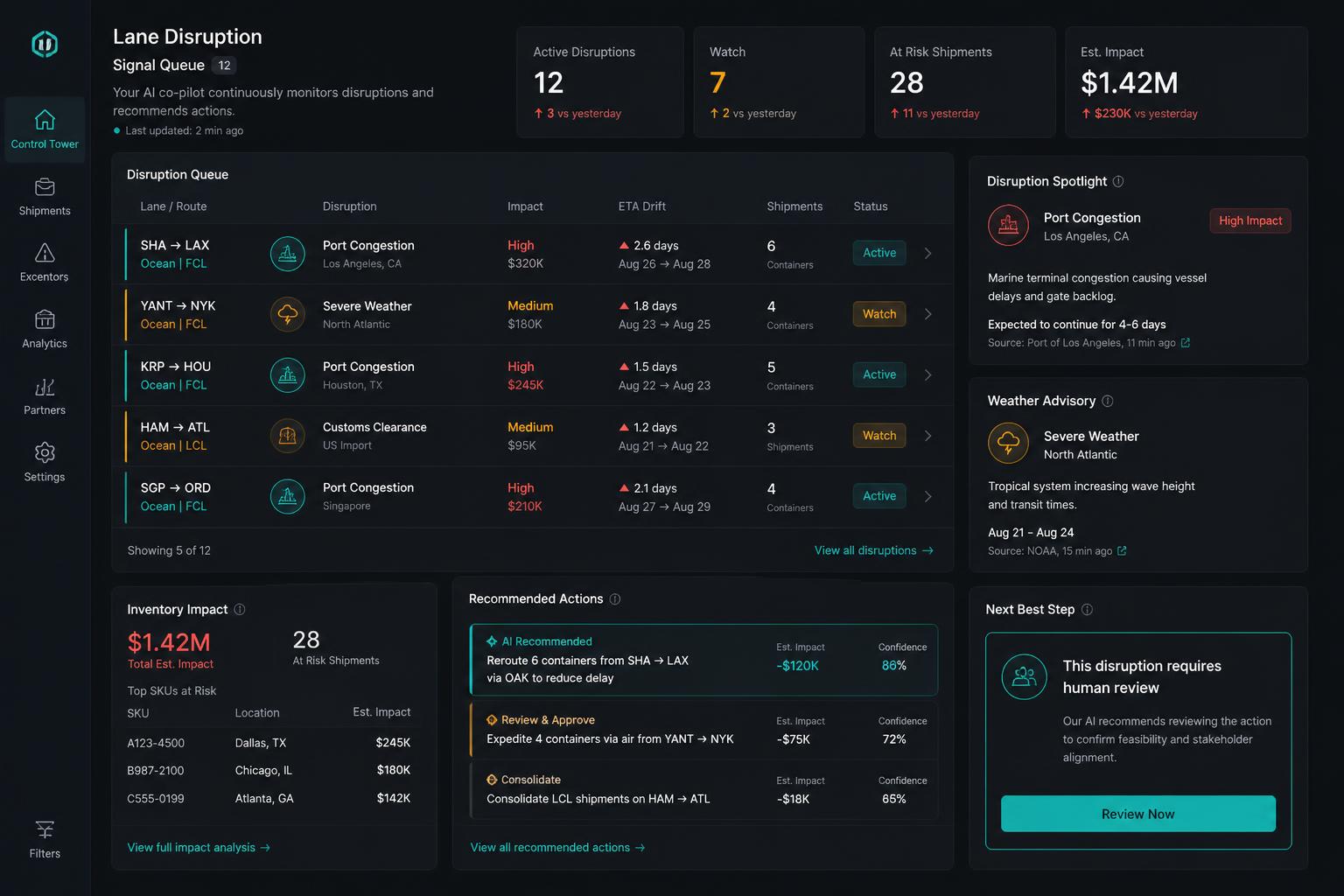
Watch external signals move toward business-critical lanes.
Port, weather, regional, and supplier signals are scored against the lanes they can reach, not published as a generic news feed.
Model depletion, then compare alternative lanes.
Run a delay scenario against on-hand coverage and consumption rate. LaneGuard shows when a material crosses its threshold and which qualified lanes can cover the gap.
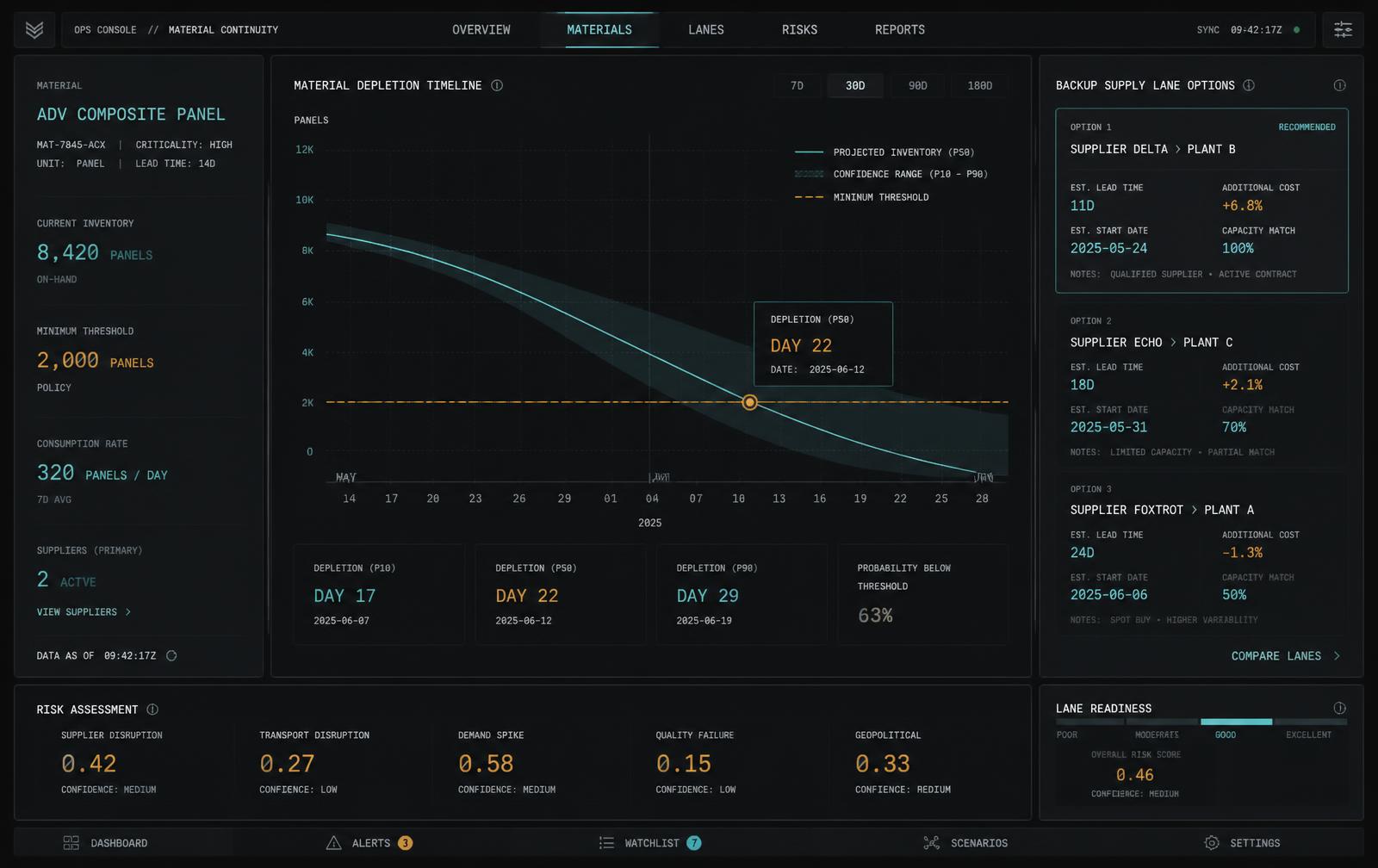
Alternative lanes are presented for review. LaneGuard does not replace suppliers or approve purchase orders.
Every recommendation arrives review-ready.
Each action card states the affected lane, the estimated impact, the confidence level, and who signs off. LaneGuard recommends; your team decides.
LaneGuard does not reroute shipments, replace suppliers, or approve purchase orders automatically. Impact figures are estimates based on your own data.
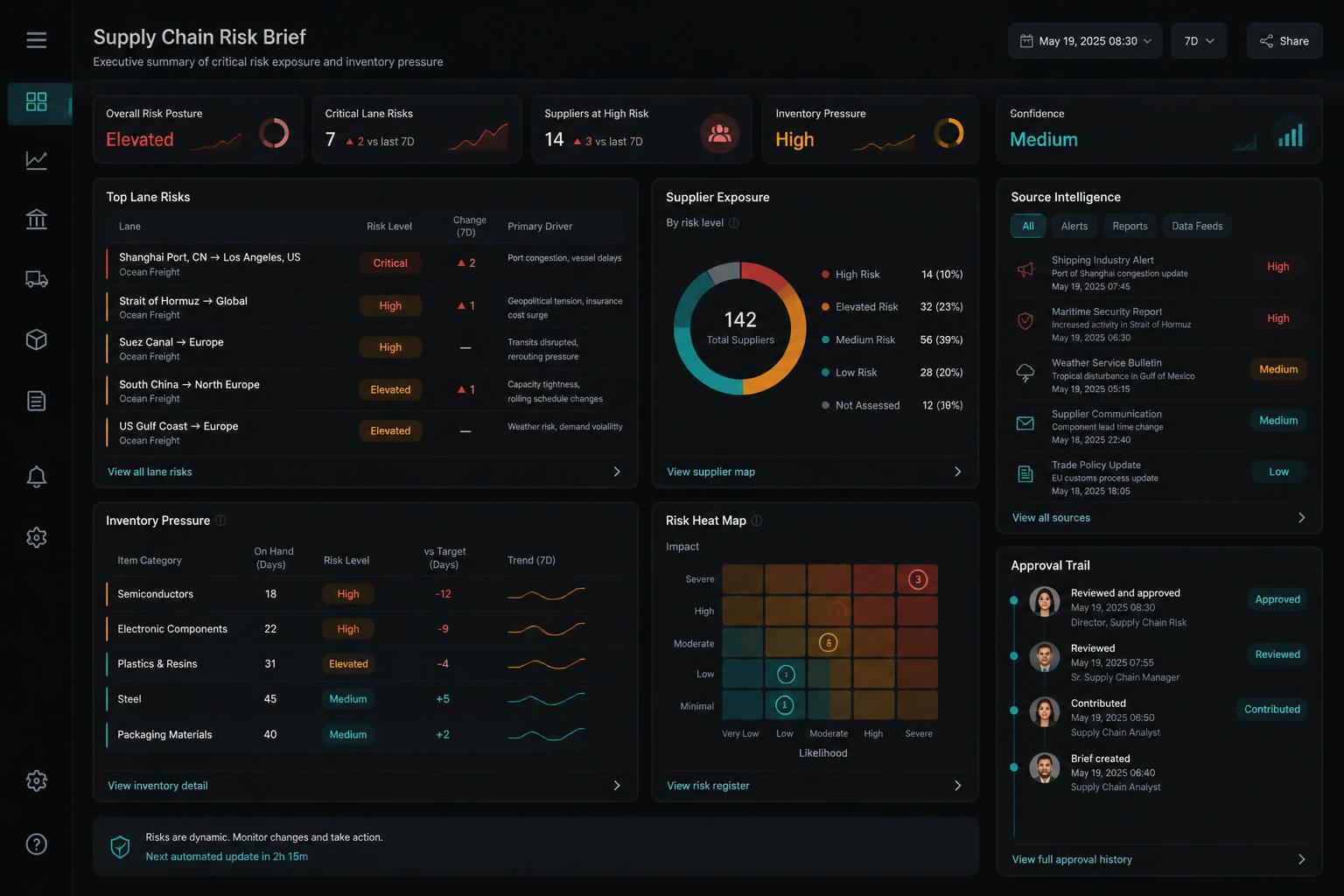
An executive brief, compiled from live lane signals.
Each Monday, LaneGuard assembles the week's lane movements, top exposures, and open actions into one page leadership can read in five minutes.
- Lane movements since last week, with severity direction
- Top exposures ranked by business impact
- Open recommended actions and their review owners
Three lanes moved into watch this week, driven by port congestion and one tier-2 capacity reduction. Two actions are awaiting review.
From scattered signals to a clear next step.
- Step 01Map the chain
Import suppliers, BOMs, and shipments. See dependencies one click deep.
- Step 02Watch risk signals
Continuous monitoring across regions, carriers, weather, and supplier health.
- Step 03Predict impact
Quantify exposure in days, dollars, and capacity by SKU and product line.
- Step 04Recommend action
Reroute, pre-buy, switch supplier — each option with expected impact reduction.
- Step 05Brief the team
Weekly risk briefs and ad-hoc alerts ready for ops, procurement, and the board.
“The critical failure in our previous stack was the disconnect between where a shipment was and who the end-customer was. We had the signals, but we lacked the dependency mapping to know which production line was actually at risk.”
One distributor, 450+ active lanes.
Headquartered in Milwaukee, WI. LaneGuard maps supplier-tier dependencies against real-time route exposure to prevent production line stoppages. The company is not named and no logo is shown, at their request.
Evidence you can follow. Decisions your team keeps.
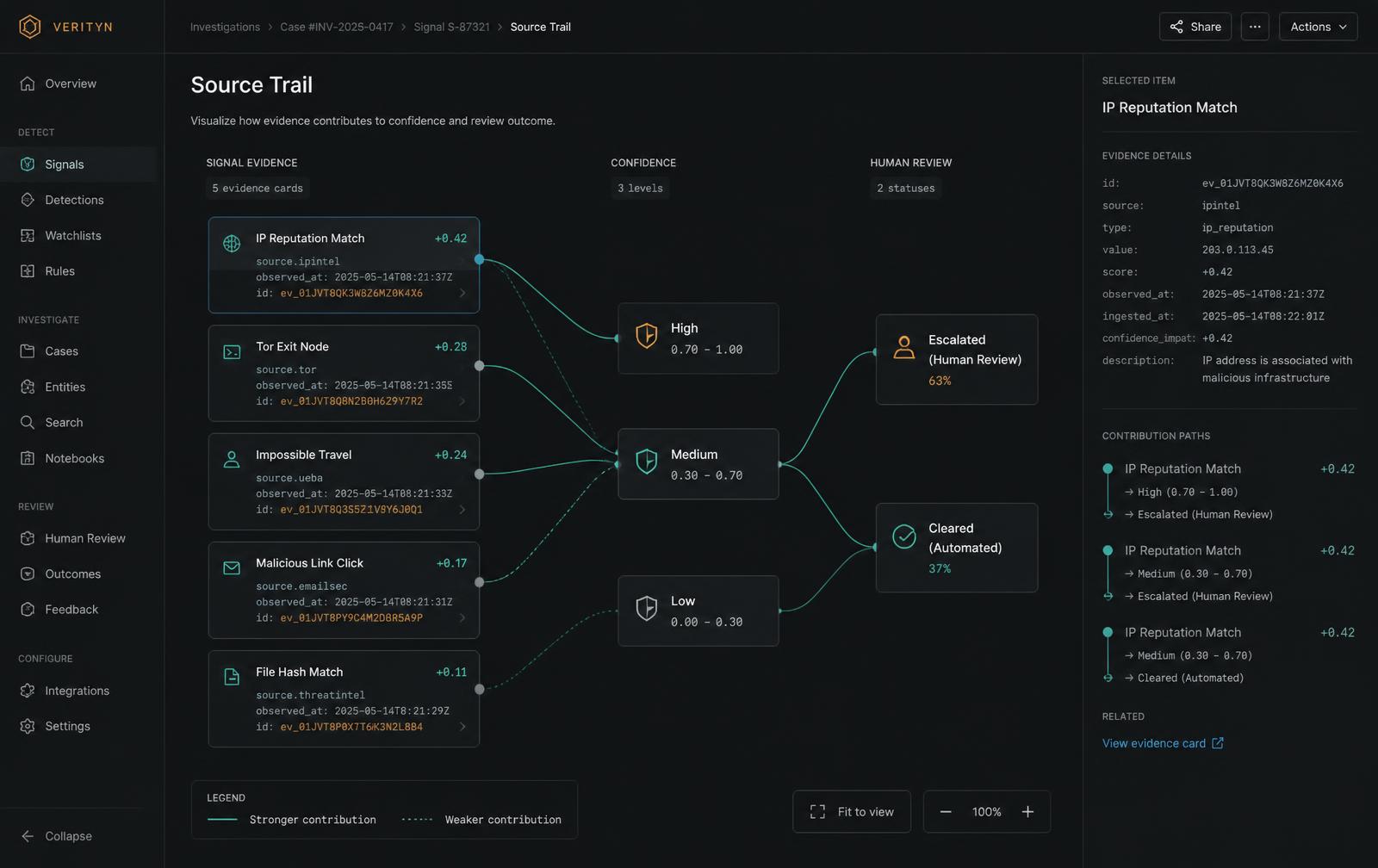
Source trails on every signal
Each alert links back to the records and advisories it came from, with ingest timestamps.
Confidence levels, stated plainly
Estimates carry a confidence value so teams know how much weight to give them.
Human approval by design
Actions stay in a review state until a named owner approves or dismisses them.
No autonomous sourcing decisions
No automatic rerouting, supplier replacement, or purchase-order approval. Ever.
LaneGuard prepares recommended actions with source context, confidence labels, and business-impact estimates. Teams review every sourcing, logistics, compliance, and procurement decision before action. LaneGuard does not autonomously reroute shipments, replace suppliers, approve purchase orders, or guarantee disruption prevention.
Real plans for real supply chains.
Small supply-chain teams checking critical lanes.
- Supplier and shipment import
- Lane risk inbox
- Source-linked signal notes
- Weekly lane summary
Growing operations teams managing daily disruption review.
- Supplier dependency map
- Disruption signal queue
- Inventory pressure view
- CSV export
- Standard support
Multi-team supply-chain operations.
- Multi-region lane views
- Scenario review
- Approval trail
- Priority support
- Security review packet
Multi-entity supplier networks and custom integrations.
- Custom lane and supplier limits
- SSO / SAML
- Dedicated onboarding
- Custom data retention
- Procurement review support
Plans are sized by seats and active lanes. Save 15% with annual billing. Start with a guided lane scan before expanding to a full workspace.

Run a lane audit before the next disruption reaches production.
Bring a supplier list or BOM. We return your first risk map and the top exposures — fast.
LaneGuard prepares recommended actions with source context, confidence labels, and business-impact estimates.
Teams review every sourcing, logistics, compliance, and procurement decision before action.
LaneGuard does not autonomously reroute shipments, replace suppliers, approve purchase orders, or guarantee disruption prevention.